Glint VeluxBespoke Tailors

The Atelier & Process

Five steps
from tape to hanger.

A Glint Velux garment is not assembled — it is built, in sequence, over weeks. Here is exactly what happens between the day you're measured and the day you put it on.

The measure

We take twenty-eight measurements by hand and read your posture — the drop of a shoulder, the stance, the way you hold your weight. We ask what you do all day, because that decides everything that follows. Your figures are recorded and kept on file for every future commission.
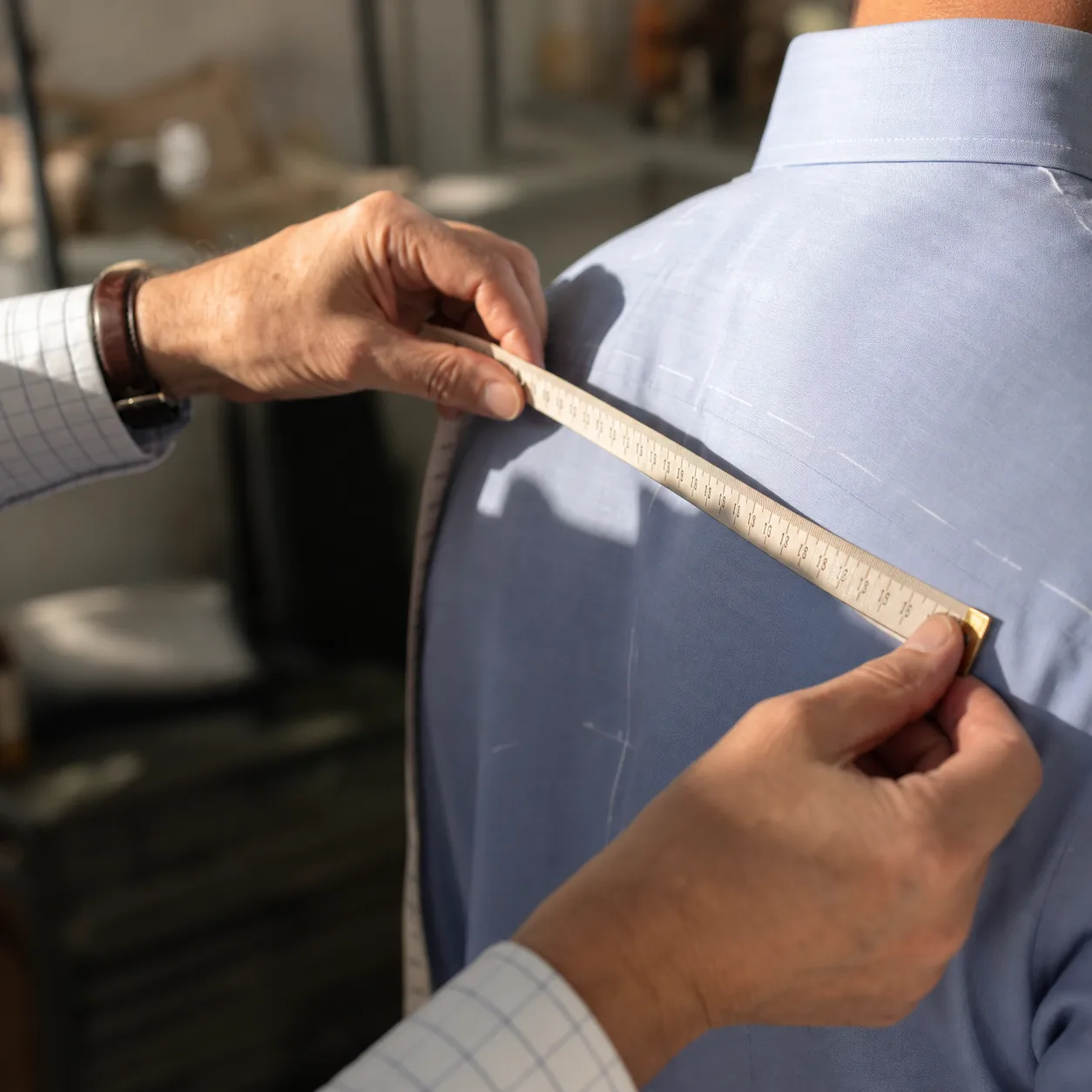
A tailor's hands drawing a tape measure across a client's shoulder in a bright fitting room, brass tape and chalk visible, focus on the cloth and hands.

The cloth

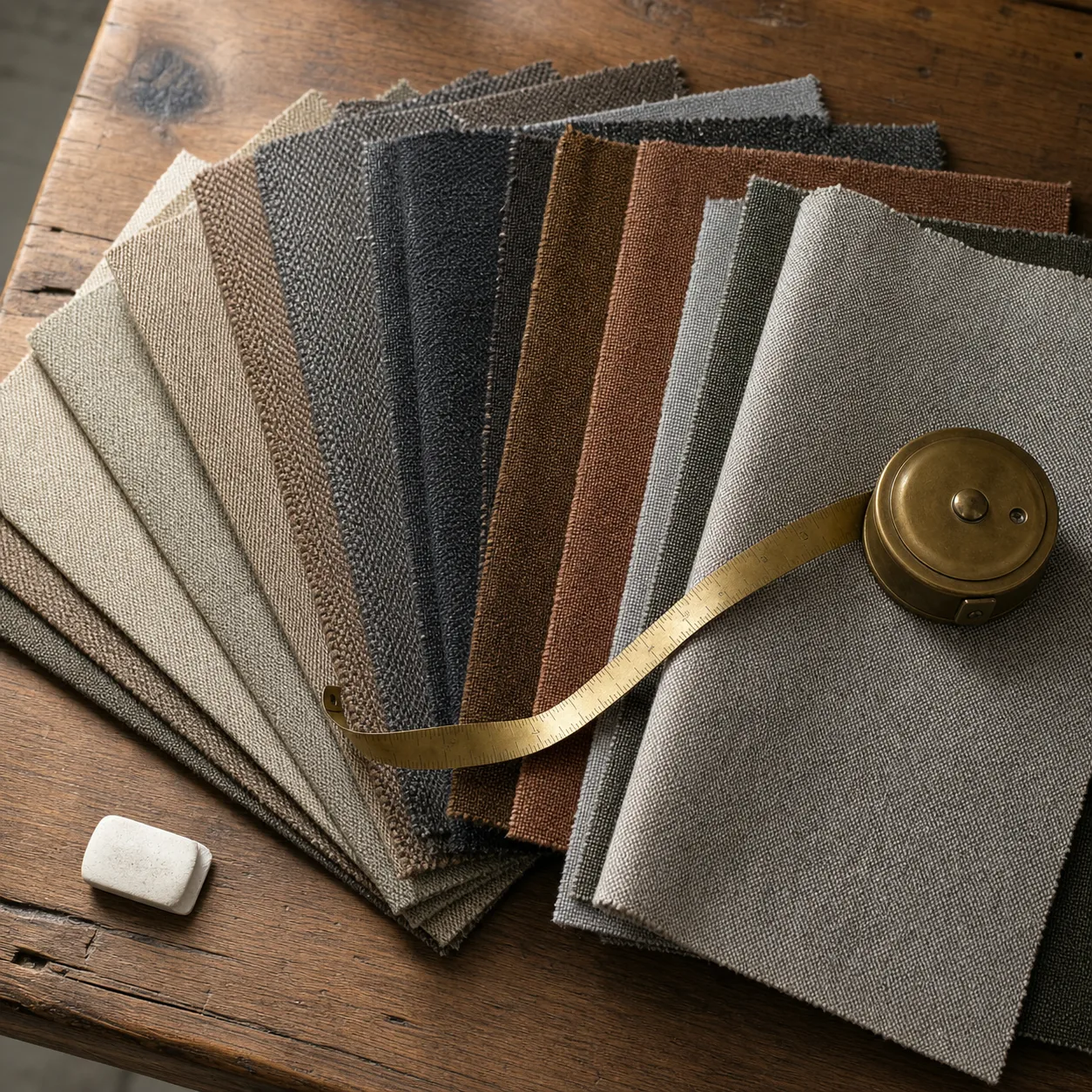
Together we choose from more than three hundred merchant bunches — matching weight, weave and twist to your climate and calendar. A boardroom flannel and a travel high-twist are different animals; we make sure the one you leave with is the one your days actually need.

A fan of suiting swatches spread across a bench in olive, camel, clay and charcoal, a brass tape measure resting across them.

The cut

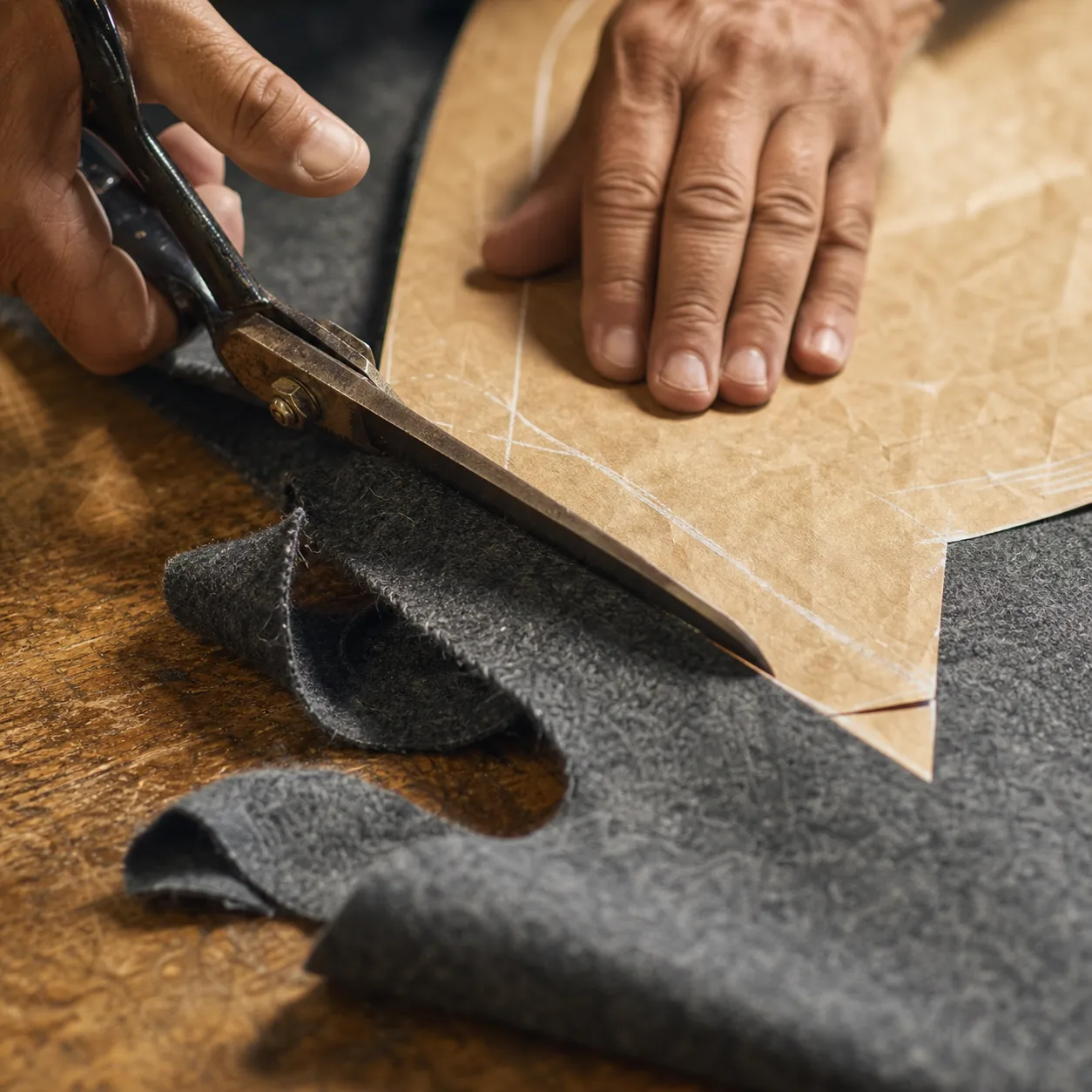
Your individual pattern is drafted — from a women's or men's block, never a generic grade — then chalked and cut by hand. This is where a suit is won or lost: balance, shoulder line and the run of the cloth are decided here, before a single stitch is set.

Hands guiding tailor's shears through grey wool along a chalk-marked paper pattern on an oak bench, offcuts curling away.

The construction

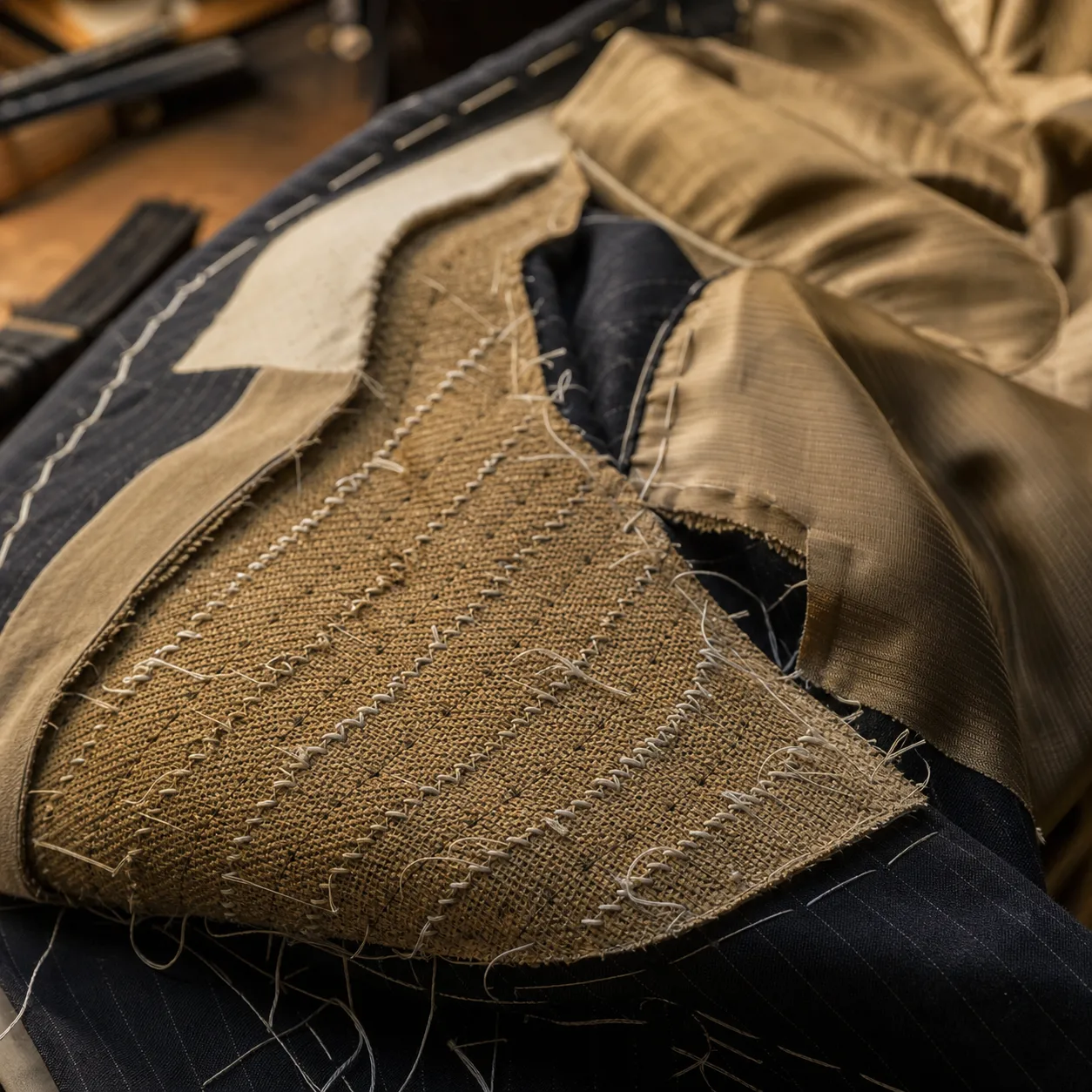
A floating canvas is shaped and hand-padded into the chest and lapel so the jacket moulds to you and breathes as you move — the opposite of a glued front. Sleeves are set by eye, seams finished by hand, linings cut clean. This is the unseen work you feel every time you wear it.

The open interior of a jacket in progress showing the hand-padded canvas chest piece and basting stitches, laid across a work table under warm light.

The fitting & finish

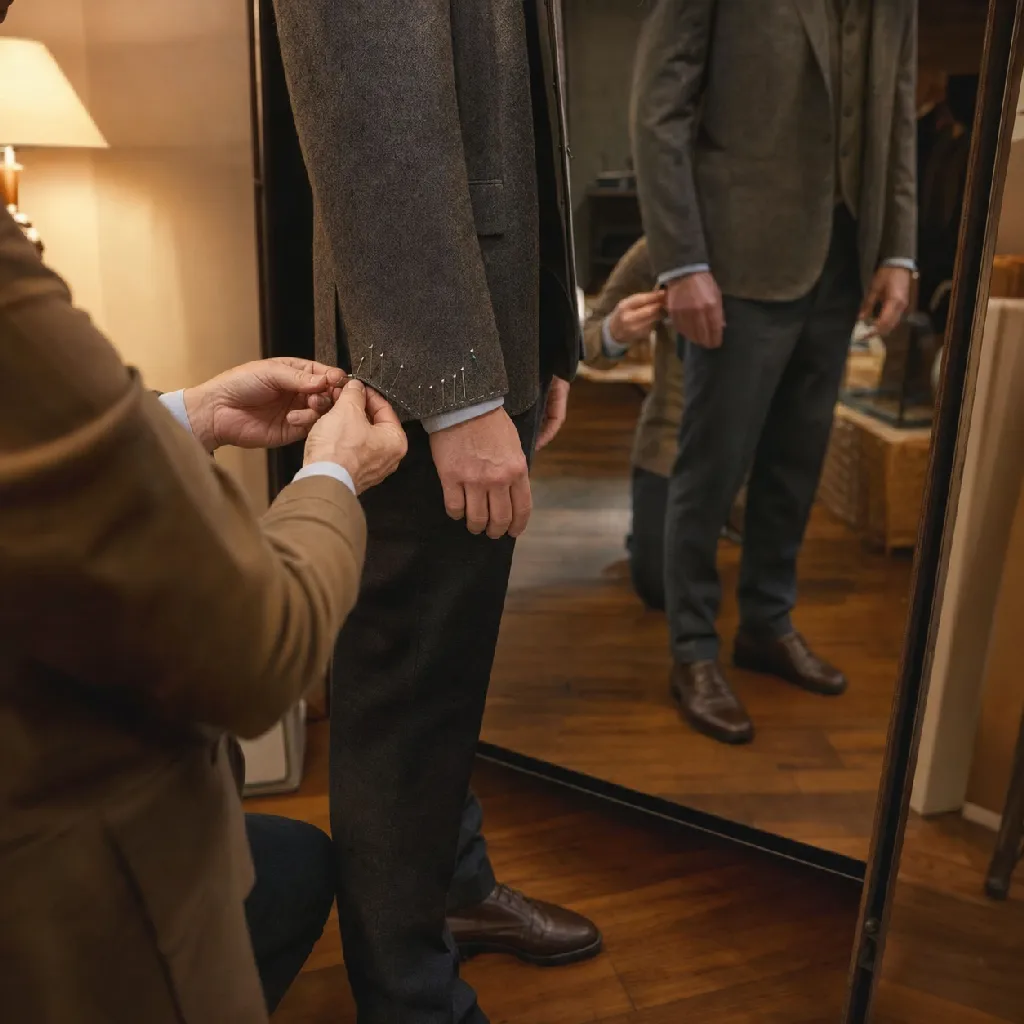
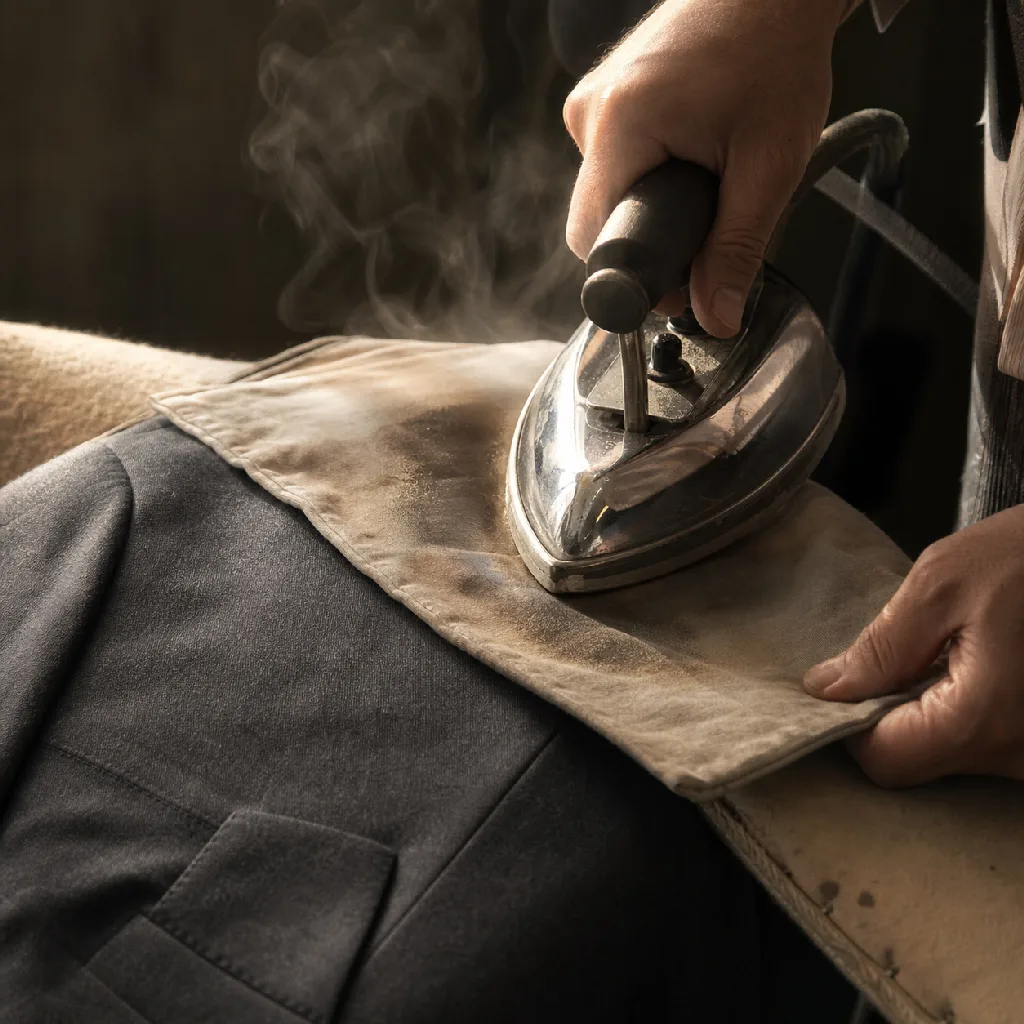
You return for fittings so we can refine the garment on your body, not a form. When the line is right, it is pressed by hand with iron and cloth — the step that turns tailoring into a finished suit — and delivered. House garments carry lifetime alterations, because bodies change and good cloth lasts.

A tailor adjusting the hem of a jacket sleeve on a client standing before a mirror in a warm-toned fitting room, chalk marks on the cuff, framed from the shoulders down.
A jacket shoulder being pressed with a heavy iron over a damp pressing cloth, a curl of steam rising in warm directional light on a padded board.

Why it takes weeks

Some of the work can't be rushed.

Pressing alone is a craft — steam, cloth, iron and patience, coaxing the wool into a shape it will remember. Padding a lapel is hundreds of small stitches you will never see. We could take these hours out; the suit would simply be worse, and you would know it within a week of wearing.

So we don't. A first bespoke commission typically takes four to six weeks from measure to delivery, and we think every day of it is visible in the finished garment.

Ready when you are

Start with a measure.

Book a fitting at the Tampa atelier, or arrange an on-site sizing day for your team. The whole process begins with one appointment.